All-on-X and full-arch workflow
IPD Multi-Unit, MUA screw and Scan Transfer.
Where does the MUA sit between the clinic and the laboratory?IPD Solutions Map · clinic ↔ laboratoryA representative system overview for screw-retained partial and full-arch restorations. The Multi-Unit abutment creates the prosthetic platform, the MUA screw defines the mechanical seating of the restoration, and Scan Transfer helps capture Multi-Unit positions more accurately in an intraoral full-arch scan.
All-on-4 / All-on-6 / All-on-X
0°, 17° and 30°
Scan Transfer
MUA screw
Exocad & 3Shape
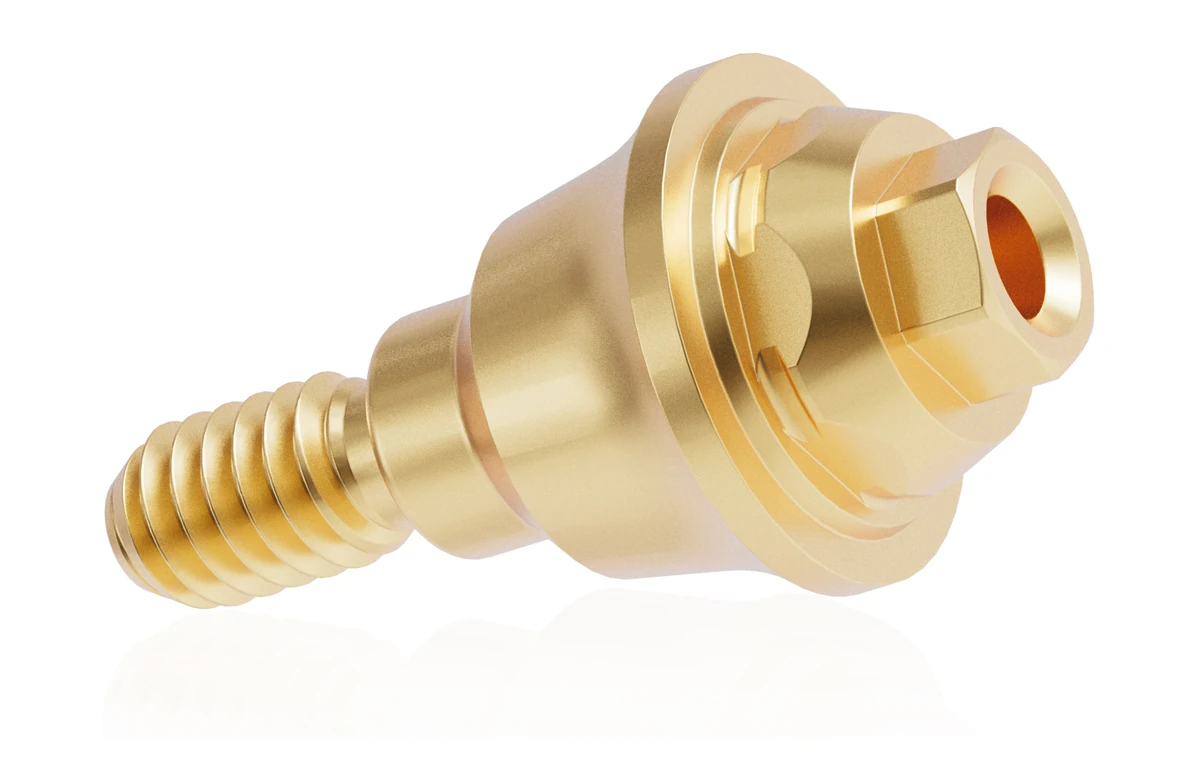 Multi-Unit platform
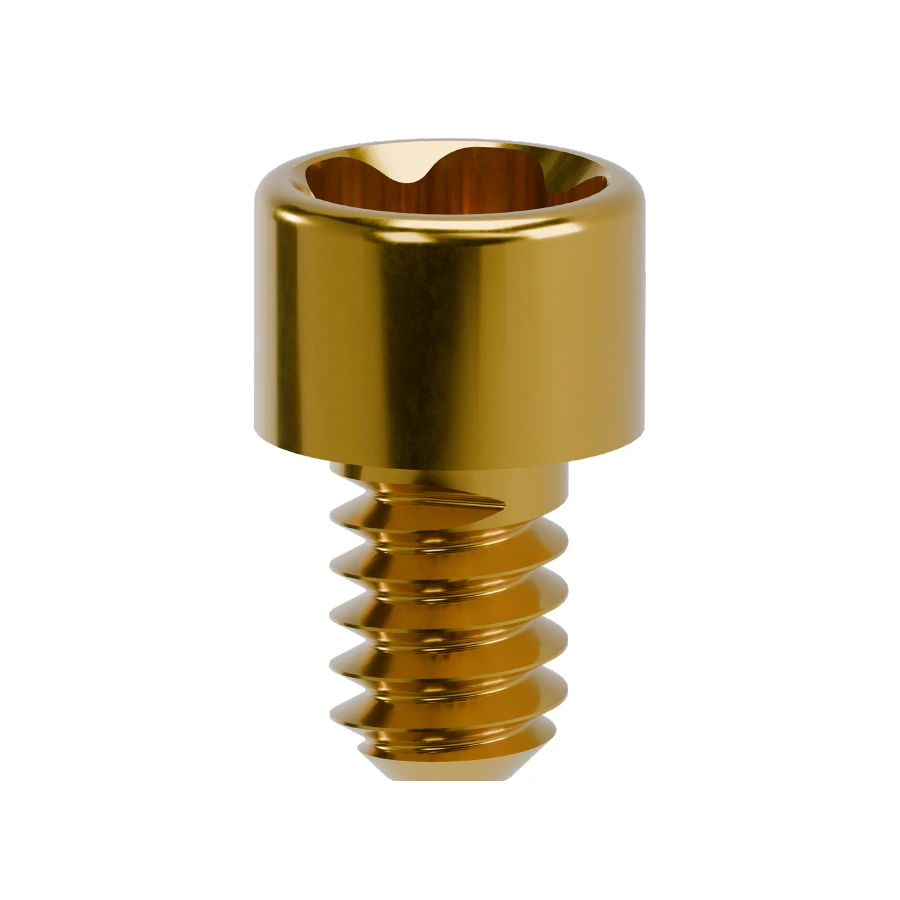 MUA screw
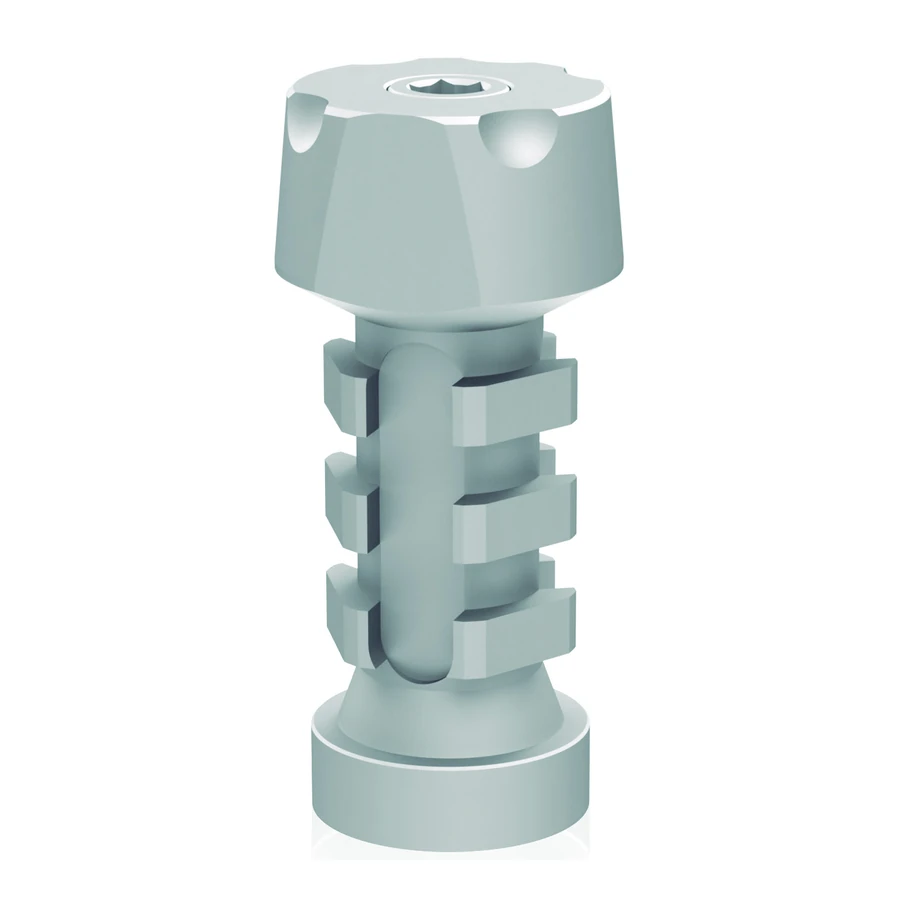 Scan Transfer
Why these components belong in one workflow
In full-arch work, continuity matters more than any isolated component
A Multi-Unit workflow is more predictable when every step is explicit: select the correct prosthetic platform, capture its position without distortion, design the restoration in the corresponding library and close the connection with a screw that does not introduce unnecessary stress into the restoration.
All-on-X logicThis page focuses on screw-retained partial and full-arch restorations, particularly workflows performed at Multi-Unit abutment level.
Digital and verification stepsA digital workflow benefits from an additional verification layer when the clinical case is sensitive to passive fit and full-arch accuracy.
Practical compatibilityCorrect selection requires the implant system, platform, angulation, gingival height, scanner and CAD software to be known.
Multi-Unit system
IPD Multi-Unit abutments: a prosthetic platform for partial and full arches
IPD Multi-Unit abutments are intended for screw-retained implant-prosthetic restorations in partially and fully edentulous arches. Their purpose is to create a clear prosthetic working level above the implant, making it easier for the clinician and laboratory to manage angulation, soft tissues and the definitive restoration.
Straight and angulated optionsIPD lists 0°, 17° and 30° options with different gingival heights for different anatomical situations.
TiN coatingThe gold tone supports aesthetics in the soft tissues, and IPD also associates the surface with mechanical and biological benefits.
Carrier for handlingThe concept includes straightforward handling during placement and use of the downstream components.
3D position acquisitionThe Multi-Unit workflow connects to dedicated IPD attachments for three-dimensional position capture.
0° / 17° / 30°different gingival heightsAll-on-4 and full-archTiN coating
MUA screw
MUA screw: a detail that affects restoration seating and force distribution
In direct screw-retained restorations at Multi-Unit level, the screw is more than an accessory. It is a functional part of the seating geometry. IPD therefore compares conical and flat seats and explains why a flat seat can be advantageous for fabrication, centring and force transfer.
Conical seat
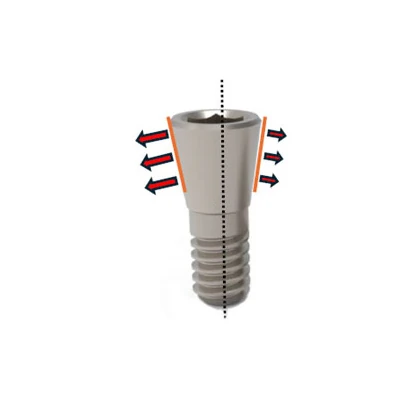
- more demanding machining of the seating surface
- greater risk of stress within the structure
- less scope for centring correction
- may reduce the available vertical dimension
IPD flat seat
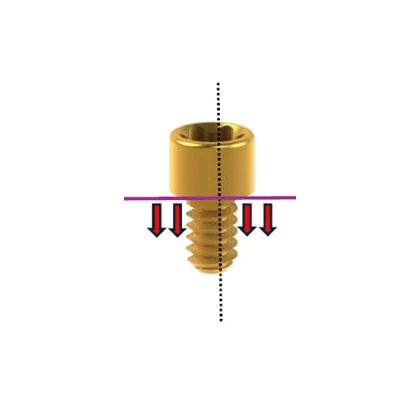
- easier machining of the restoration seat
- potential for centring correction
- more perpendicular and uniform force distribution
- better integration with direct screw-retained restorations
Practical significance:According to IPD materials, the longer EA-TR-51 screw allows the seating depth of the CAD structure to increase from approximately 0.4 mm to 1.1 mm without reducing thread engagement. This is the kind of detail that is invisible in the finished restoration but may influence the mechanical behaviour of the entire structure.
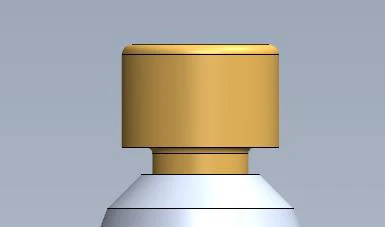 Standard seating
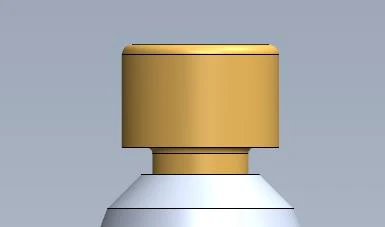 Increased seating depthTiN coating and torque transferFor straight and angulated channels
Scan Transfer
Scan Transfer: more accurate capture of Multi-Unit positions in demanding full-arch workflows
Scan Transfer was developed for situations in which an intraoral full-arch scan is sensitive to error. In edentulous arches and posterior regions, scanning can depend strongly on operator technique and on how the software stitches partial data. Scan Transfer therefore extends the conventional scan-body approach with geometry and protocols designed to provide the scanner with a more readable, continuous pathway.
Only-top geometryCAD alignment focuses on the upper part of the conical head so that it remains readable during axial scanning.
SplintingThe retentive body allows the transfers to be splinted and helps reduce the risk of mesh deformation across the arch.
5 µm toleranceIPD specifies a manufacturing tolerance of 5 µm, Grade V ELI titanium and a matte surface.
Analog verificationThe workflow can be combined with a master jig or open-tray impression protocols.
Important distinction:Scan Transfer is primarily associated with Multi-Unit-level intraoral scanning. For desktop laboratory scanners, the protocol should be validated separately because surface finishes may affect scanning differently from the intraoral environment.
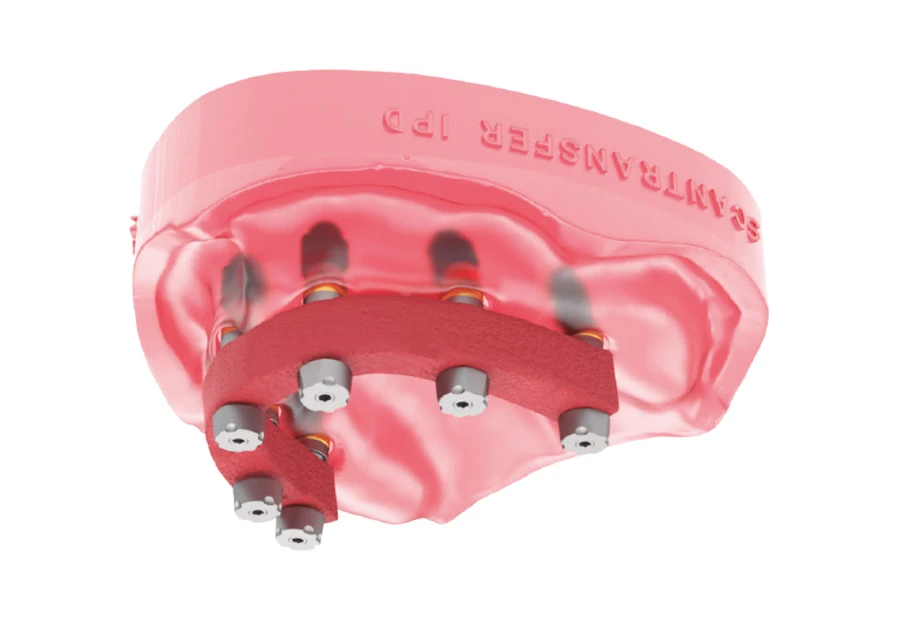 Splinted arch
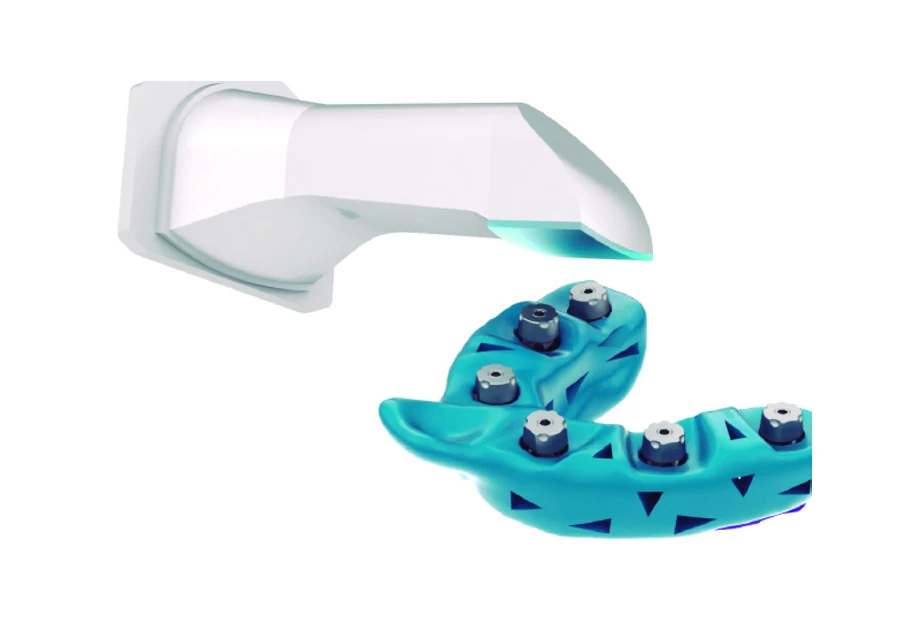 Verification protocols
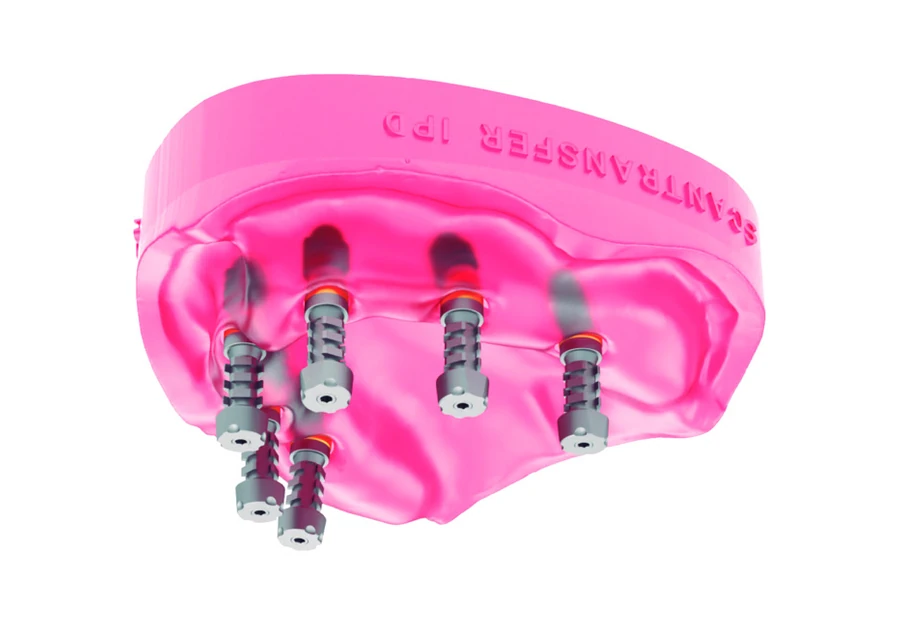 Full-arch acquisition
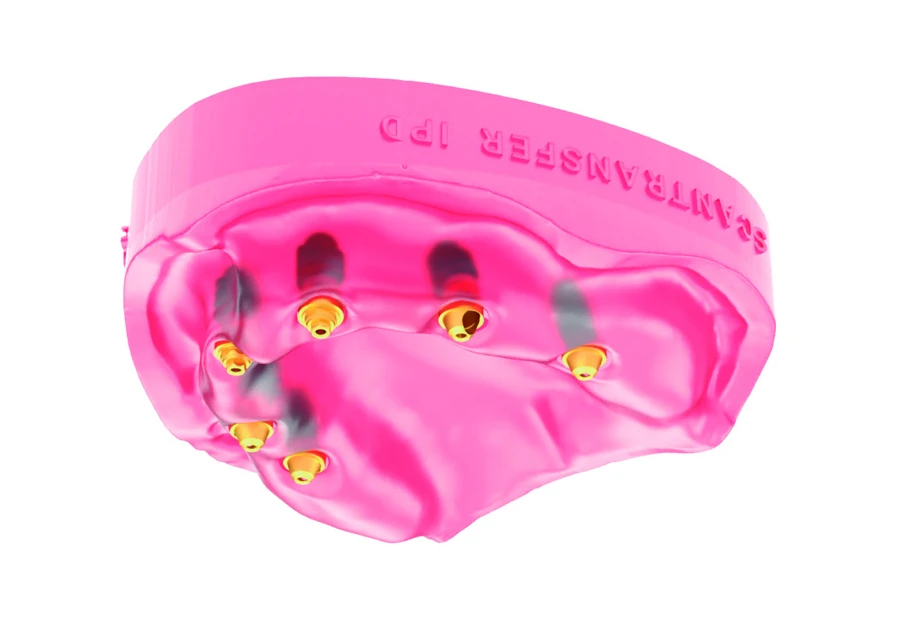 Multi-Unit reference
CSS|Strategy · De|Bug · Re|Scan
Three protocols that bring control and verification back into the digital workflow
In intraoral scanning, the challenge is not only local accuracy around each scan body but the overall topography of the arch. When point clouds are stitched incrementally, small deviations can accumulate across the full arch. Scan|Transfer protocols provide the scanner with a guiding structure and give the team an opportunity to verify the data before the definitive restoration is fabricated.
CSS|Strategy
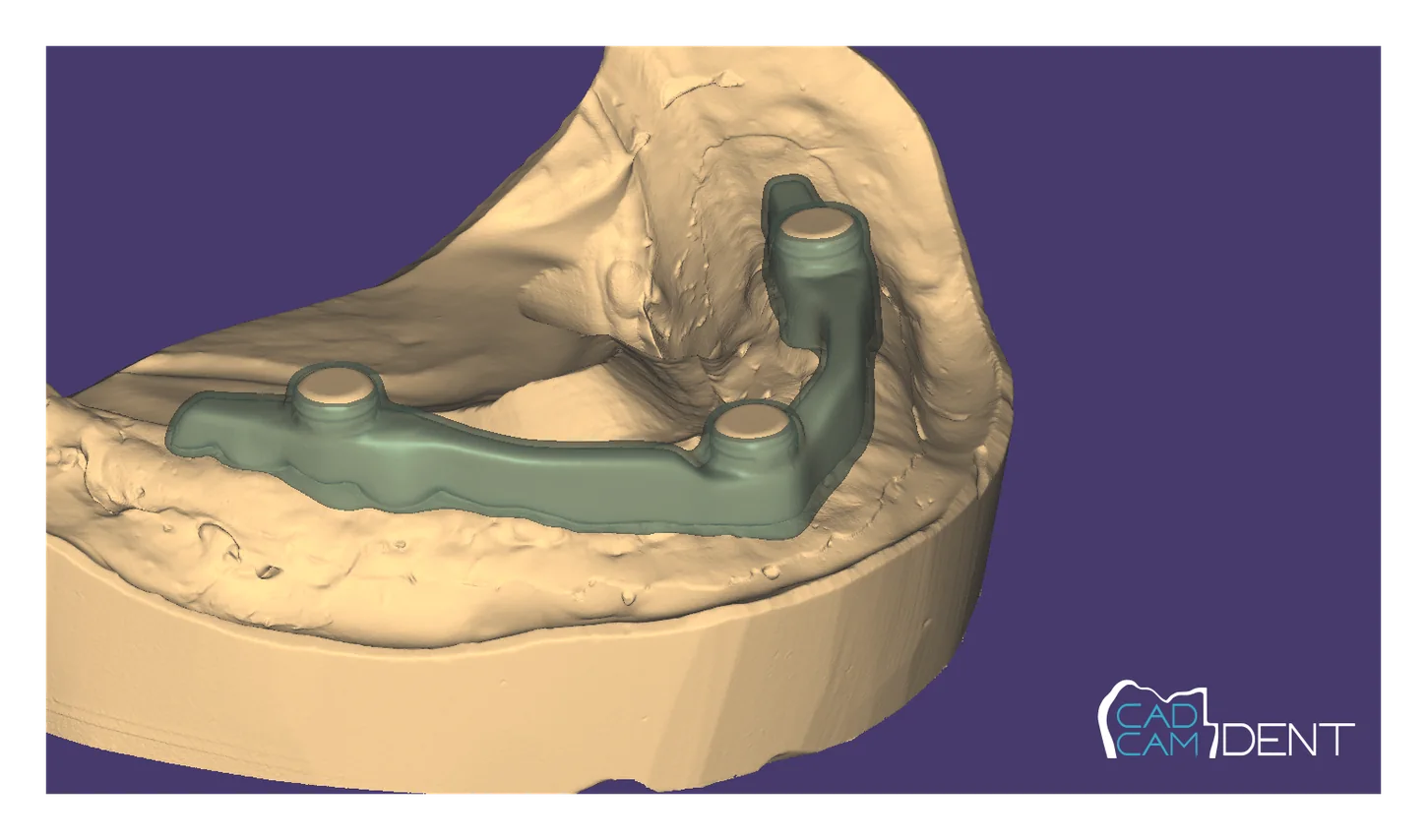
The scan bodies are rigidly splinted with a fixation bar, creating a continuous “scanning pathway” that allows the intraoral scanner to move without unnecessary jumps between isolated reference points.
- more continuous data acquisition
- lower risk of arch distortion
- suitable for extensive full-arch situations
De|Bug
The digital workflow is supplemented with an analog verification element. A stone verification key or control model can help verify implant positions and reveal a problem before definitive fabrication.
- position verification before completion
- possibility of laboratory correction
- lower risk of incomplete restoration seating
Re|Scan
The most accessible part of the arch is scanned intraorally, and the remainder is completed extraorally on the removed splinted model. This reduces the influence of the tongue, cheeks, saliva and limited access.
- combination of intraoral and extraoral acquisition
- better use of an anterior reference
- a practical route for difficult-to-access regions
When should Scan Transfer be used instead of a standard scan body?When working at Multi-Unit abutment level in an All-on-4, All-on-6 or All-on-X indication, Scan Transfer can be useful for improving and verifying a full-arch scan. If scanning can instead be performed directly at implant level and the heads of standard IPD scan bodies are fully exposed and clearly readable, a standard implant-level scanning protocol may be more appropriate.
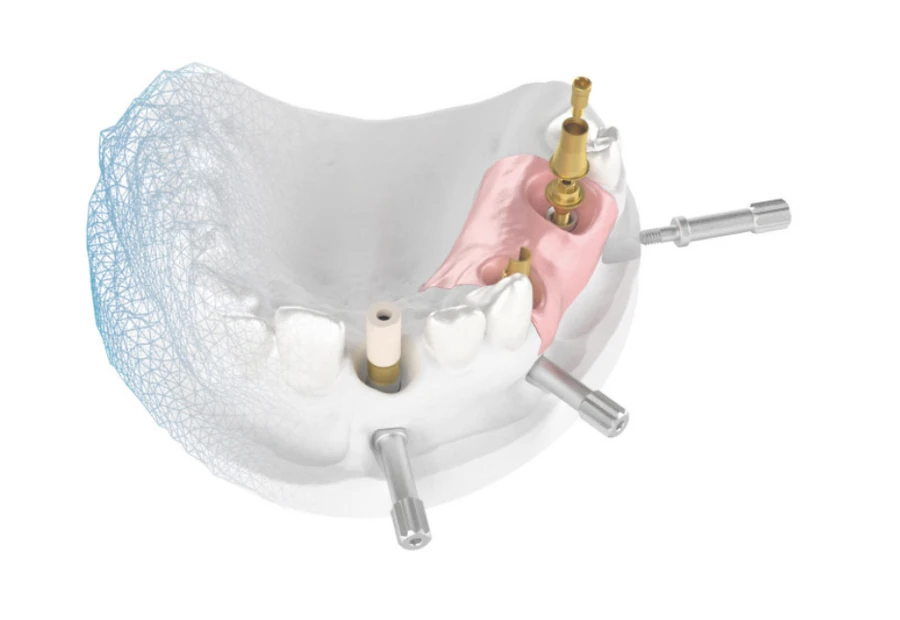
Precision matters
Why accuracy matters: six points that influence passive fit, function and long-term stability
The IPD “Precision Matters” material presents accuracy as a chain. In full-arch work, an error may not become apparent where it originated. It may only appear in the restoration, during seating, in occlusion or in long-term mechanical behaviour.
1Treatment planningCBCT, anatomy, implant axes and biomechanical risks.
2Scanning and data integrationReadable reference points, best-fit and full-arch verification.
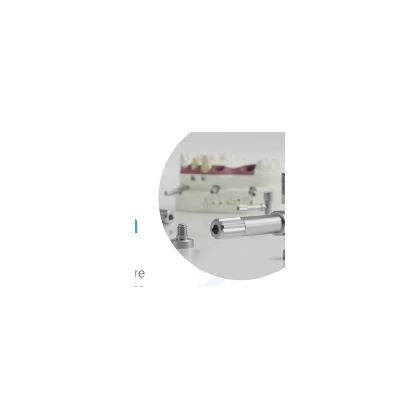
3CAD and manufacturingGeometric stability in the X, Y and Z axes and continuity between libraries.
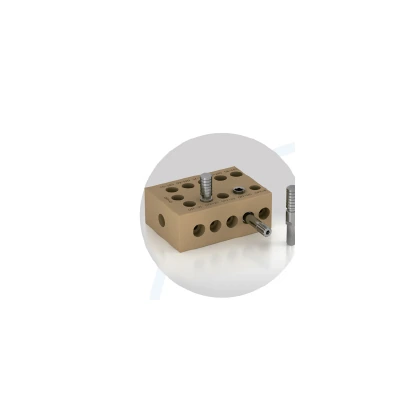
4Model validationOffset testing, calibration and a 3D-print verification protocol.
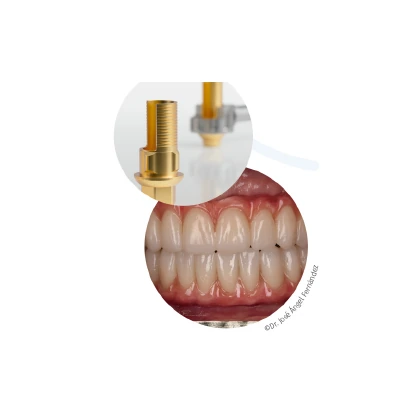
5Aesthetics and profileHeight, emergence profile, material and a natural appearance of the restoration.
6Long-term stabilityCorrect seating, occlusion and resistance to functional loading.
Short product videos
Geometry is often easiest to understand in motion
The videos remain supplementary. The key information is presented in text, so the page remains useful without playing video and avoids unnecessary loading overhead.
Multi-Unit system
A view of the component that creates the prosthetic platform for screw-retained full-arch restorations.
Scan Transfer
A solution for more accurate capture of Multi-Unit positions in All-on-X workflows.
Pre-order check
What to verify so the workflow does not fail on small details
The most common errors do not arise because an individual component is inherently wrong. They arise when the system, platform, scanning element, library and restoration type do not match.
Implant system, platform and whether the workflow is at implant level or Multi-Unit level.
Required Multi-Unit angulation, gingival height and available prosthetic space.
Scanning method: intraoral, desktop, combined or supplemented with analog verification.
CAD software in use and the specific library for the Multi-Unit, Scan Transfer and MUA screw.
Whether the restoration is designed as a direct screw-retained structure on the Multi-Unit head or uses an additional prosthetic interface.
Whether a verification model, stone key, master jig or another control step will be required before definitive fabrication.
Is Scan Transfer always necessary?
No. It is most useful in full-arch workflows at Multi-Unit level where the intraoral scan needs additional accuracy and control of arch distortion. If implant-level scanning can be performed reliably with standard scan bodies and their heads are fully visible, the standard protocol may be more appropriate.
Is the MUA screw just a replacement screw?
Not in this context. In direct screw-retained restorations, it influences seating geometry, centring and force distribution. It therefore matters whether the restoration uses a flat seat and the corresponding CAD library.
What should you send to technical support for verification?
Send the implant brand and platform, Multi-Unit type, angulation, gingival height, scanner, CAD software, intended restoration type and, ideally, a screenshot of the library or design.
Send us the system, Multi-Unit type and software you use
We can help verify the continuity between the Multi-Unit abutment, Scan Transfer, MUA screw and CAD library. In full-arch work, checking the details in advance is far easier than troubleshooting strain in a finished restoration.
New interactive guide
Full-arch scanning: MUA, Scan Transfer and ScanLogiQ
This practical page connects clinical steps, data verification, ScanLogiQ/AssistLogiQ and passive-fit verification in extensive implant cases.
