
CSS|Strategy
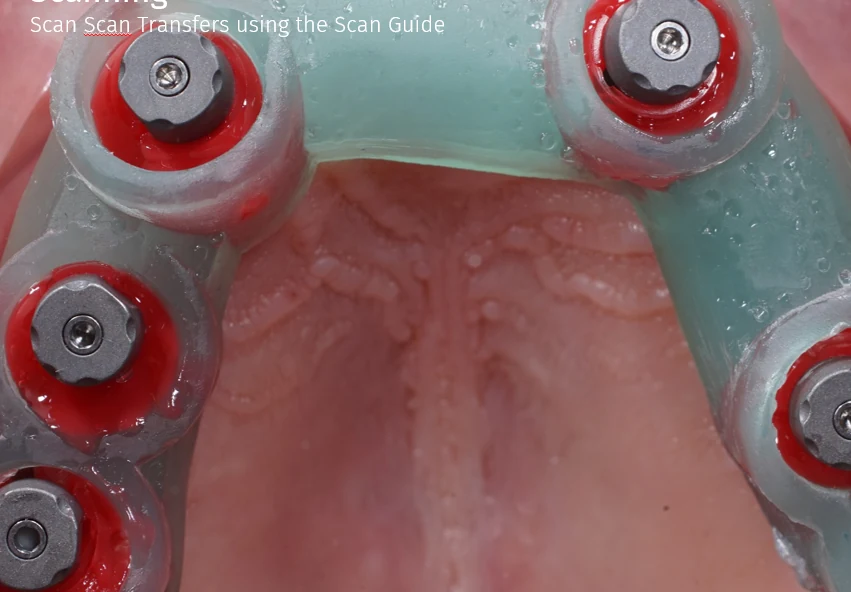
Rigidly connected references create a clearer and more continuous path. The aim is to reduce situations in which the scanner loses orientation and has to “stitch” the 3D image again.
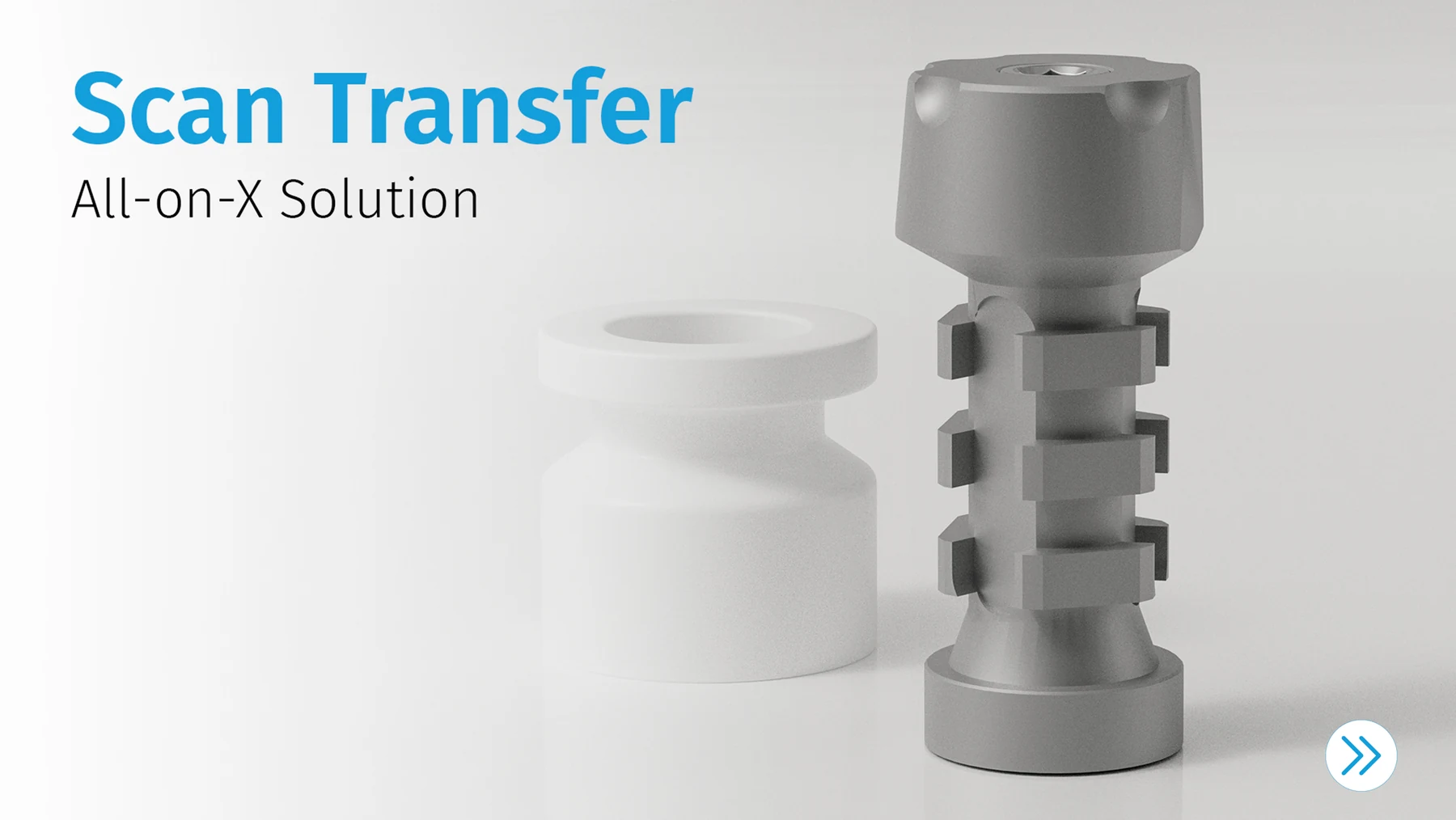
Scan Transfer is not a universal “more accurate scan body”. It is a solution for cases at Multi-Unit abutments (MUA)where the aim is to simplify the scan path, connect references and, when needed, create an independent physical verification of implant positions.
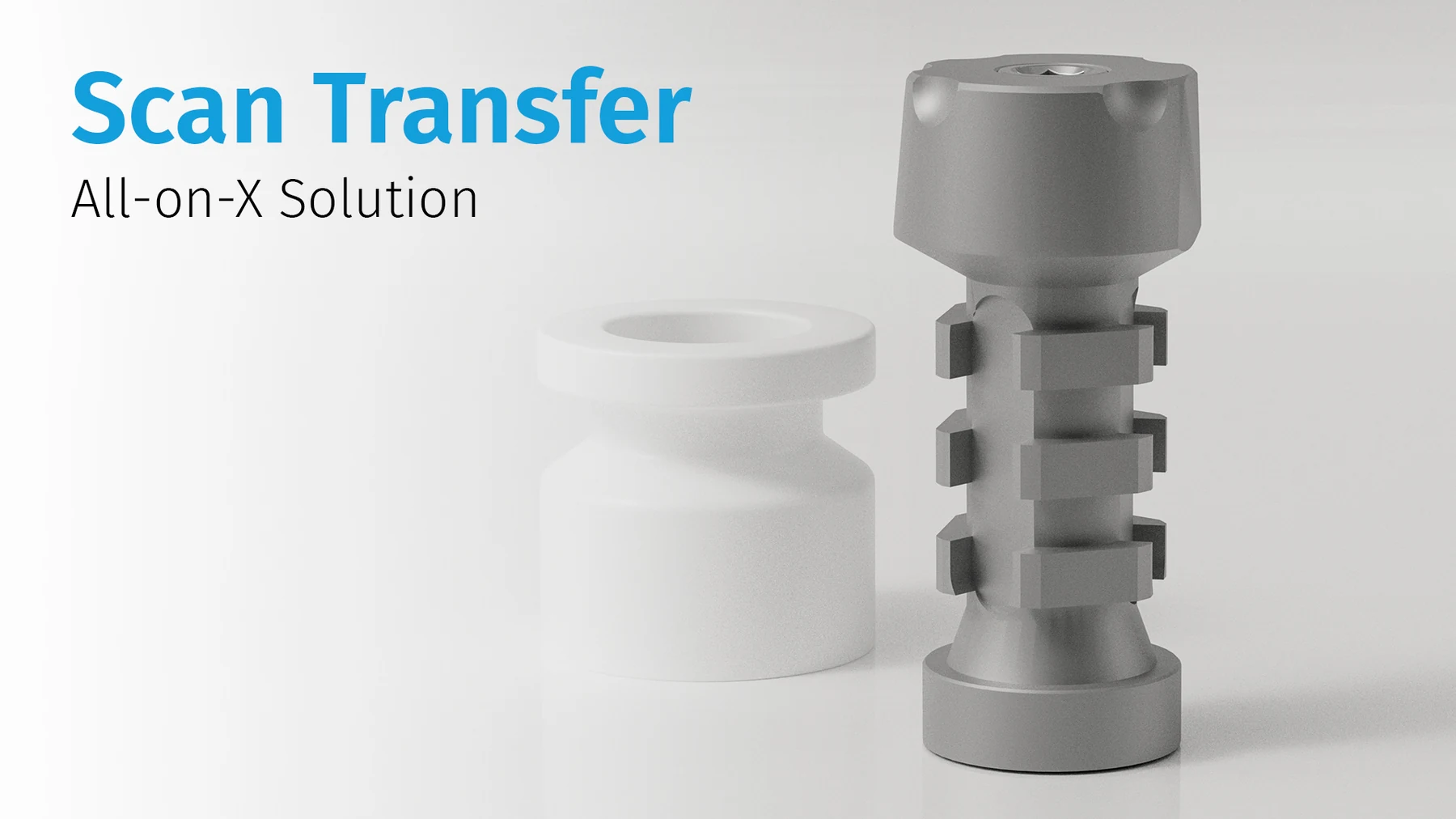
New evidence gives Scan Transfer a more precise place within the overall ecosystem. The product is intended for MUA connections and is useful when a physical reference structure addresses a specific case risk. If the clinical team achieves predictable implant-level results without MUA, there is no reason to add Scan Transfer simply because it exists.
Rigidly connected references create a clearer and more continuous path. The aim is to reduce situations in which the scanner loses orientation and has to “stitch” the 3D image again.
The rigid assembly is used to create a physical key or model. The laboratory therefore gains an additional verification channel outside the original intraoral acquisition.
The reliable part of the record is acquired intraorally; the problematic part can be captured or repeated extraorally under more controlled conditions.
Both solutions address accumulated deviations in a long edentulous arch. They differ in how they how create verification.
| Question | Scan Transfer | ScanLogiQ |
|---|---|---|
| Main principle | A rigid physical reference and transfer between the intraoral and laboratory environments. | Repeated independent scans with software assessment of their consistency. |
| Working level | Multi-Unit abutments. | MUA platform supported by the ScanLogiQ system. |
| Verification | CSS, physical key/model and, where appropriate, extraoral Re|Scan. | 4× Scan Flag iQ + AssistLogiQ, followed by clinical verification. |
| Where it is strongest | When we want to physically connect references, shorten a problematic scan path or involve the laboratory in independent verification. | When we want standardised repeated digital acquisition and an immediate decision based on data agreement. |
Neither digital strategy replaces clinical verification of seating and passive fit of the definitive restoration.
An error can arise between individual references during image stitching. Scan Transfer therefore addresses more than the geometry of one scan body: it creates a relationship across the arch and, depending on the selected protocol, adds another verification layer.
Decide whether the case genuinely works at MUA level and which risk Scan Transfer is intended to address: the scan path, physical verification or a difficult area.
The connection must not alter the relative positions of the scan bodies during polymerisation, milling or handling.
This is not a mandatory three-part sequence. In the published clinical case, CSS and De|Bug were used, while Re|Scan was not required because access was good.
Digital and physical validation should capture a problem before definitive manufacturing. Seating of the final restoration is ultimately confirmed clinically.
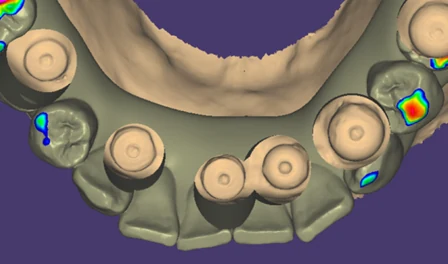
Five implants, planning, a rigid PMMA arch, intraoral scanning with PrimeScan, a physical laboratory key and a repeated scan to confirm positions. This sequence shows why it is useful to separate acquisition od validation.
This is not a randomised clinical trial and does not prove that a rigid splint always improves every scan. It is a clinical-laboratory demonstration of a specific risk-control system.

I am a professional within the meaning of Section 2a of Czech Act No. 40/1995 Coll., on the Regulation of Advertising. I confirm that I am authorised to access pages intended for professionals.