Low-profile design
Reduces the required prosthetic volume and helps preserve space for the prosthesis framework, aesthetics and patient comfort.
Removable implant prosthodontics
A low-profile overdenture system compatible with Locator®, designed for a clear clinical workflow and flexible selection of retention.
IPD presents PSD as a fully digital-ready solution that allows compatible accessories to be used without changing the established prosthetic principle. The system combines three retention levels, a low profile, TiN surface and a dedicated carrier that simplifies handling during the chairside workflow.
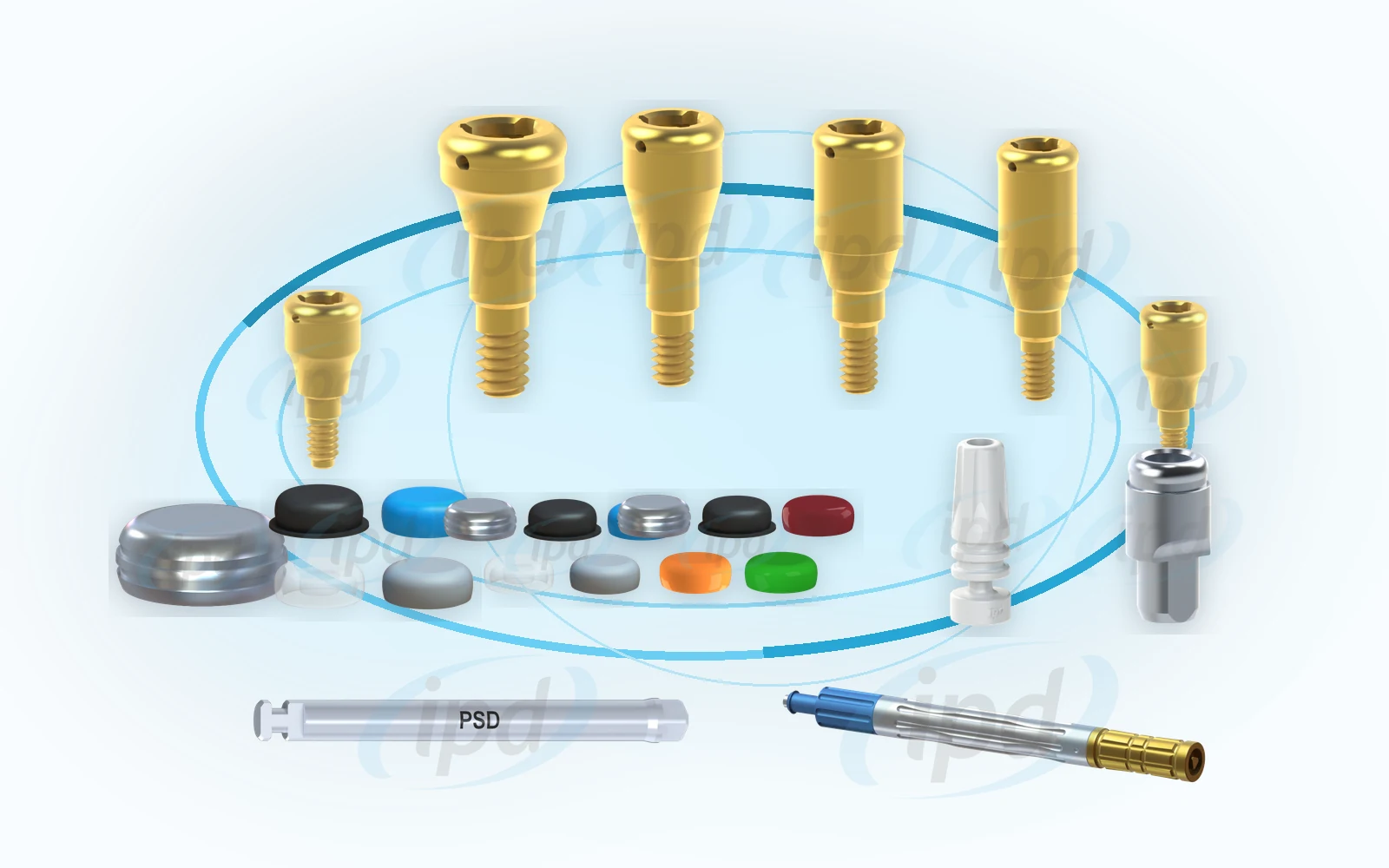
PSD in three layers
Components within one system
Selected references from the current register show that PSD is not a single attachment but an interconnected chain of clinical, laboratory and digital components. Always verify the exact platform and gingival height before ordering.
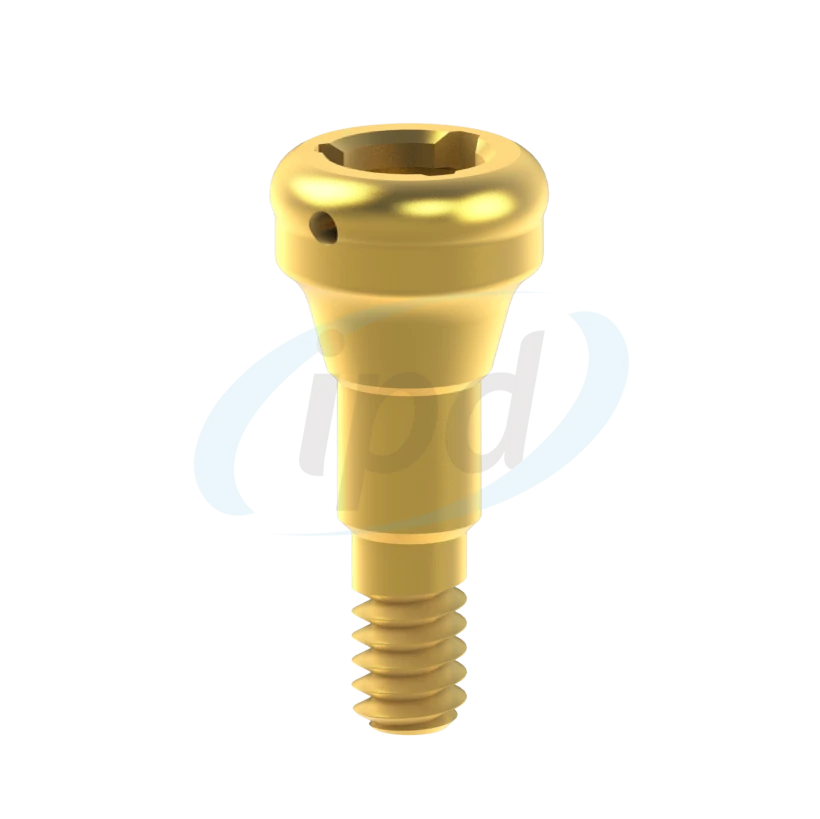 DB-LN-01 · PSD attachmentExample of an implant-specific attachment, GH 1 mm.
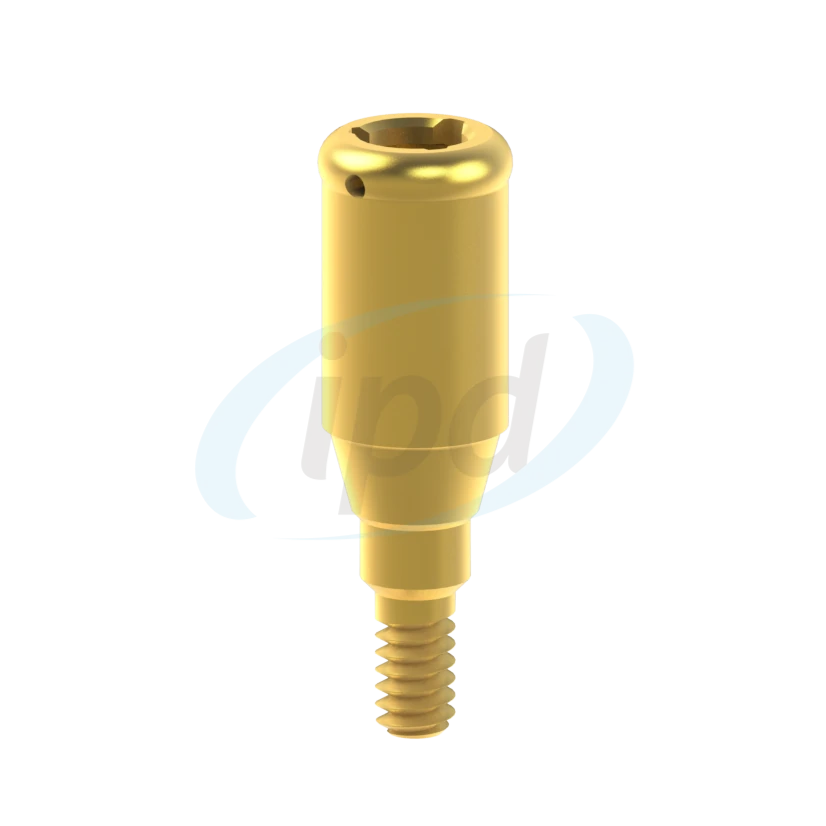 DB-LR-05 · PSD attachmentExample of another platform and gingival-height variant.
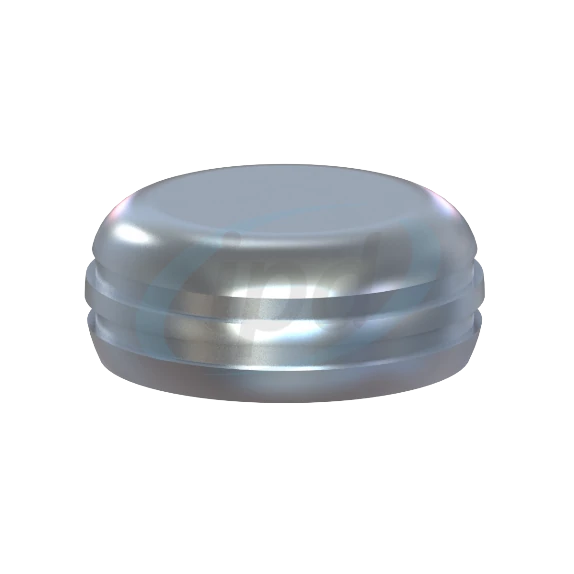 KA-CL-00 · titanium housingHousing for incorporation into a removable prosthesis.
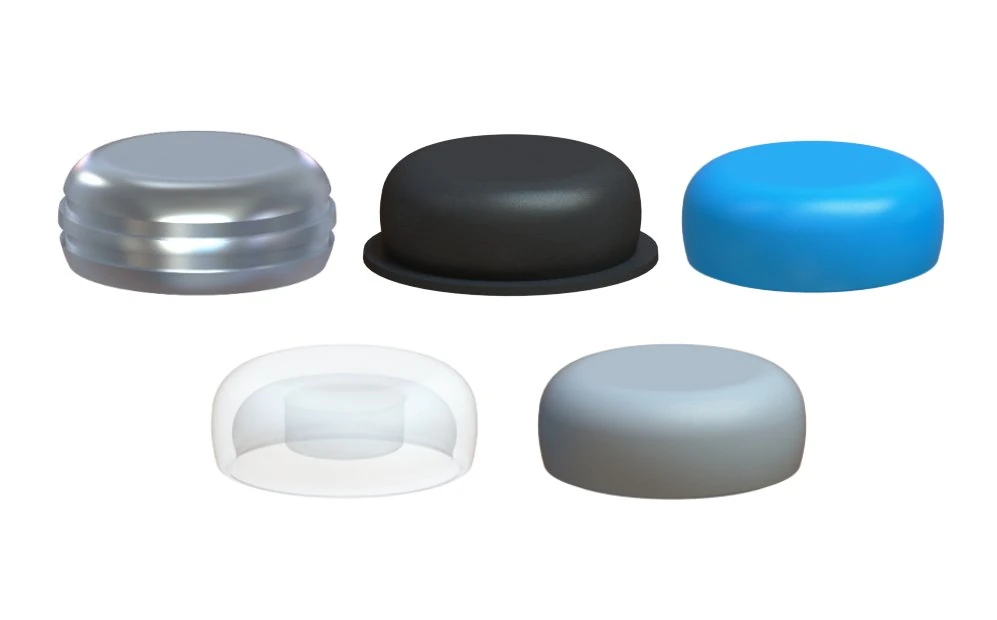
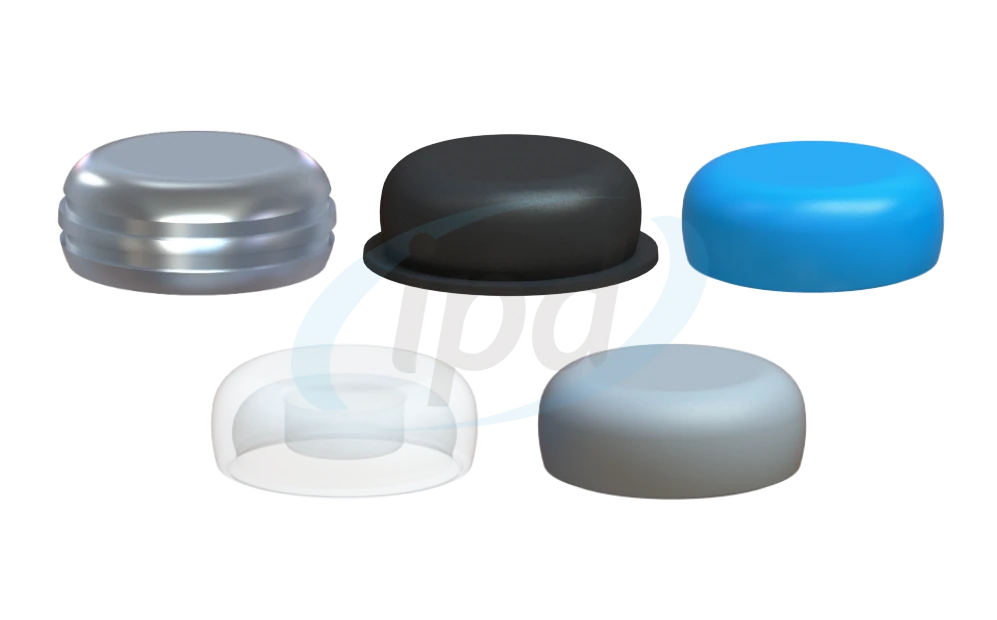 KA-CL-02 · 20° processing pack20° retention family + titanium housing for prosthesis processing.
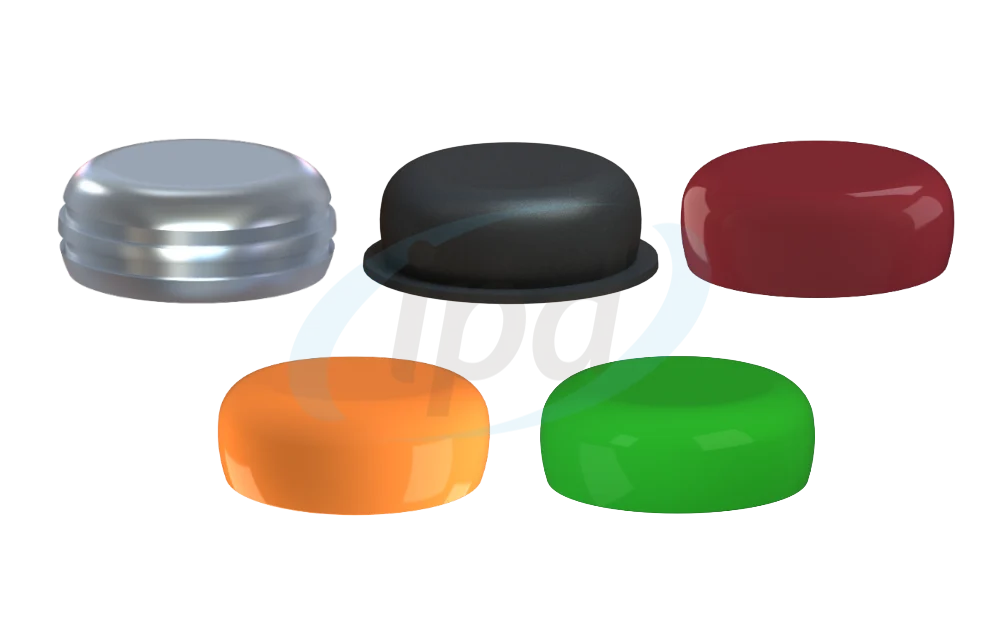 KA-CL-03 · 40° processing packDivergent 40° retention family + titanium housing.
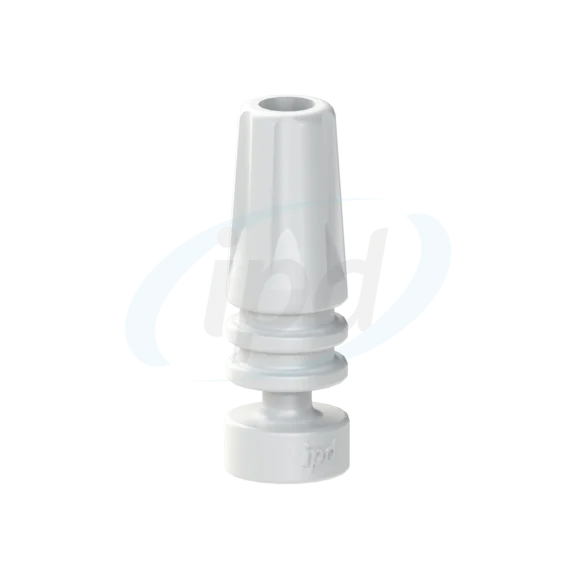 KA-CL-14 · 3 functionsCarrier, impression coping and scan abutment according to length.
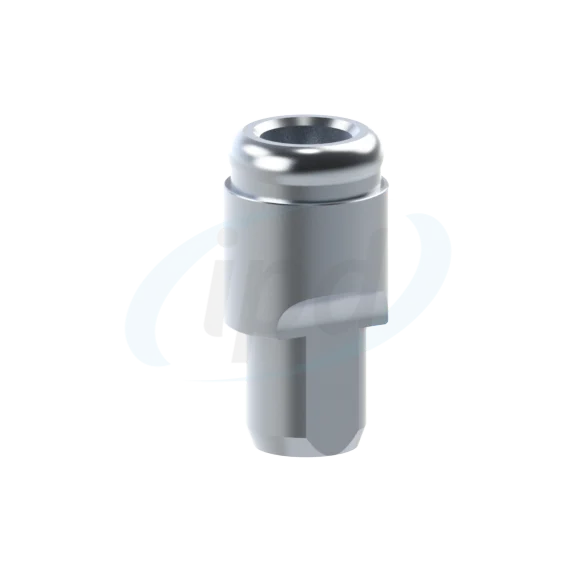 PS-AR-00/3D · digital analogPSD position in a 3D-printed working model.
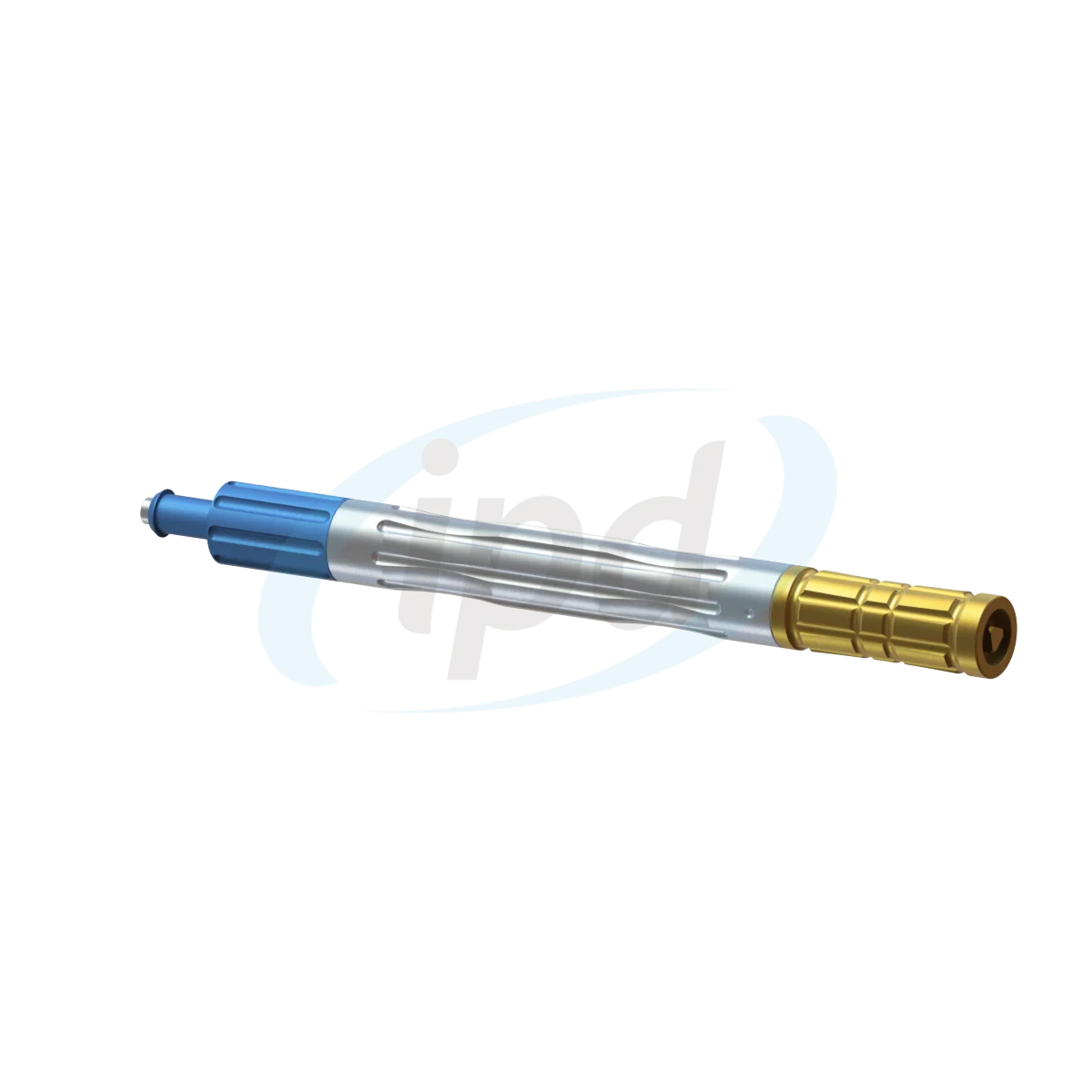 LL-PS-01 · Core ToolTool for handling PSD retention inserts.
PSD System at a glance
The individual system components are designed as one continuous chain from the abutment to the matrix within the prosthesis. Correct function therefore depends not only on selecting the attachment, but also on matching the platform, gingival height, prosthetic space and retention.
Reduces the required prosthetic volume and helps preserve space for the prosthesis framework, aesthetics and patient comfort.
Allow insertion and removal resistance to be selected according to the number of attachments, their relative positions and the clinical requirement.
IPD specifies it to support aesthetics, long-term properties and a favourable response of the surrounding soft tissues.
Facilitates gripping and handling of the component and provides support for the clinician during the chairside workflow.
Matrices, retention inserts and processing tools create a continuous system for both clinic and laboratory.
PSD can be integrated into the wider IPD workflow, including digital design, CAD libraries and technical compatibility verification.

Illustrative system overview. Exact references and package contents must be verified according to the implant system and selected configuration.
From implant to prosthesis
Connects the implant to the retention mechanism and is selected according to the system, platform and gingival height.
Support secure handling and a clearer clinical workflow.
Transfers retention into the removable prosthesis and requires sufficient prosthetic space.
Defines the level of retention. Selection depends on the clinical situation and the manufacturer's instructions.
Support processing, replacement of retention elements and subsequent system maintenance.
Selection without blind spots
Compatibility with the retention system does not mean that every abutment is universal for every implant. The exact implant reference and the spatial conditions of the specific prosthesis remain decisive.
Knowing the brand alone is not enough. Different implant lines may use different connections.
The platform diameter or designation determines the correct prosthetic interface of the PSD abutment.
The transmucosal height must match the soft-tissue level and the planned emergence above the mucosa.
The number of implants, their relative positions and non-parallelism influence the choice of retention protocol.
Allow for the abutment, matrix, retention insert and sufficient thickness of the prosthesis base.
The initial insert is selected with regard to the clinical situation, the patient's ability to handle the prosthesis and the number of attachments.
Clinical-laboratory continuity
The PSD System does not end when the prosthesis is delivered. When selecting components, plan from the outset for future replacement of retention inserts, hygiene and verification of prosthesis seating on the soft tissues.
Explore the IPD digital workflowSystem, model, platform and clinically required gingival height.
Correct implant reference and emergence height above the soft tissues.
Verify prosthetic space, housing position and passive seating of the prosthesis.
Retention insert according to the clinical situation and manufacturer's instructions.
Insertion, removal, stability, occlusion and cleanability of the completed prosthesis.
Regular checks and replacement of retention elements according to wear.
Compatibility in practice
One advantage of PSD is compatibility with an established retention principle. The new attachment must nevertheless be matched correctly to the implant and the clinical situation.
Video · practical demonstration
The video complements the written workflow with a practical view of the PSD System. For exact component selection, sterilisation and tightening torques, always follow the current instructions for use for the specific reference.
From overview to working protocol
This page explains the system and component selection. The practical steps are separated so that chairside and laboratory processing are not mixed with CAD/CAM bar or framework fabrication.
Selection of the 20°/40° family and retention strength, the three KA-CL-14 lengths, stone or 3D model, chairside housing pickup, articulation, definitive inserts and maintenance.
Open clinical protocol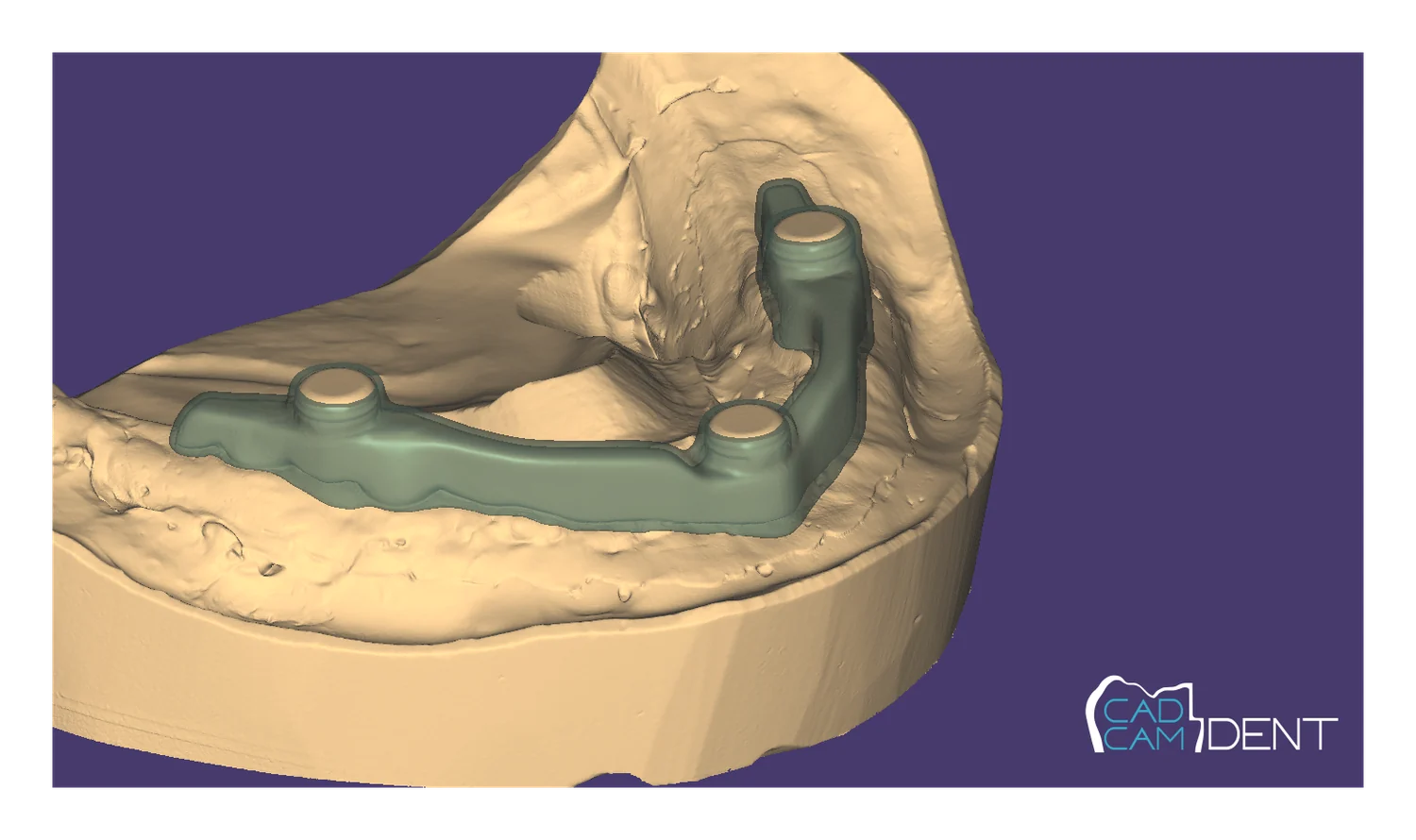
Transfer of the starting position, design of a common path, PS-LR-00 threaded sites, milling, KA-CL-14 in the scan configuration, PS-AR-00/3D and completion of the retention section.
Open CAD/CAM workflowConnected IPD portal
The PSD System forms part of the wider IPD portfolio of components, libraries and technical support.
Scan, library, design, component and verification in one continuous chain.

Overview of new IPD systems and digital solutions.

TECH, LITE, installation and verification of the correct library branch.

Accurate digital transfer of the implant or abutment position.

Screw-retained partial and full-arch restorations.
Development, manufacturing, quality and technical support for the Czech and Slovak Republics.
Related professional reading
The PSD workflow is linked to transfer accuracy, connection geometry and loading direction. These articles explore the mechanical and digital context beyond the product instructions themselves.
Common questions
Technical support for the Czech and Slovak Republics
Send us the implant designation, platform and required height. We will help identify the PSD abutment and compatible retention accessories.
Locator® is a trademark of its respective owner. Stating compatibility does not imply any commercial or organisational affiliation between the trademark owner and IPD Dental Group or Exklusiv Dent s.r.o. Components must be used in accordance with the manufacturer's current instructions for use and professional clinical judgement.
NEW DECISION HUB
Start from the situation where you have an anatomical STL and need to choose between direct PSD attachments, a new KA-CL-14 scan or a CAD/CAM bar.
Important information for use
PSD attachments, housings and accessories must match the implant system, platform and selected retention protocol.

I am a dental professional within the meaning of Section 2a of Act No. 40/1995 Coll. on the Regulation of Advertising. I confirm that I am authorised to access pages intended for dental professionals.