

English technical abstract
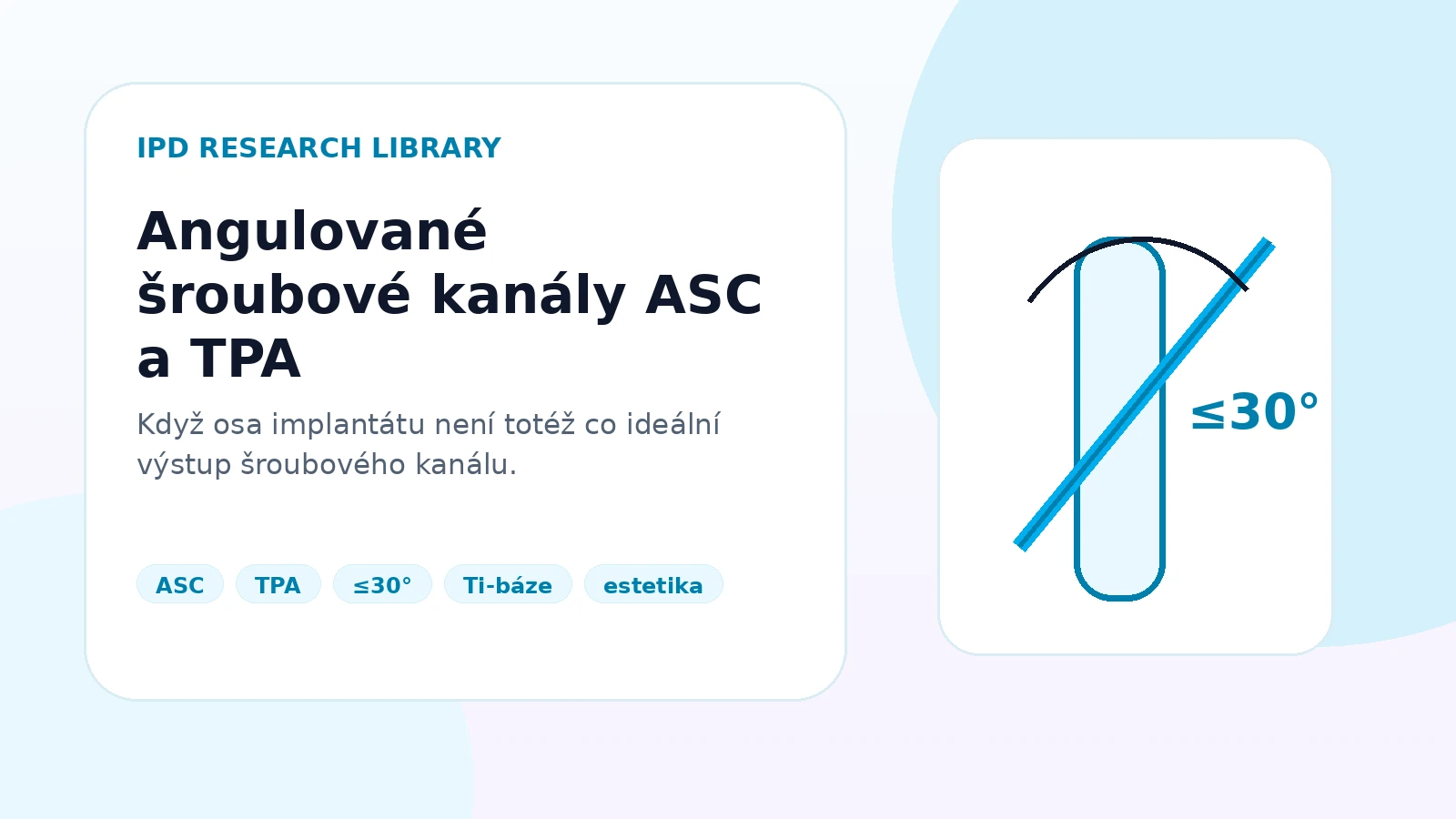
The article explains the role of ASC/TPA angulated screw channels in implant prosthodontics. A conventional screw channel follows the implant axis, which can be unfavourable in the aesthetic zone or posterior regions. An angulated channel allows screw access to be moved to a more favourable position.
The benefit is not purely aesthetic. Angulation can improve access for tightening, preserve a screw-retained restoration and, in combination with a Ti-base or Multi-Unit solution, provide greater freedom in restoration design.
What the article covers and how to read it
Relevance for the laboratory, dental practice and technical support
- With ASC/TPA solutions, verify that the selected component, screw, driver and library actually support the planned angulation.
- Angulation is not a cosmetic shortcut. Poor design can compromise torque transfer or the mechanical safety of the connection.
- The page links naturally to Ti-bases, fixation screws, the Multi-Unit workflow and the screw-channel angulation table.
Limitations and cautious interpretation
Original source article
Original title: Advanced Esthetic and Functional Solutions in Implantology: The Revolution of ASC / TPA Inclined Screw Channels
Download the original PDF
The source document remains available so readers can verify the original wording, methodology and results.
Related IPD pages and workflows
Glossary of abbreviations and specialist terms
An asterisk next to a term in the text refers to its explanation below.
- ASC
- ASC means angulated screw channel, allowing screw access to be redirected away from the implant's straight axis.
- TPA
- TPA is IPD's solution for an angulated transocclusal fixation channel and screw tightening at an angle.
