

English technical abstract
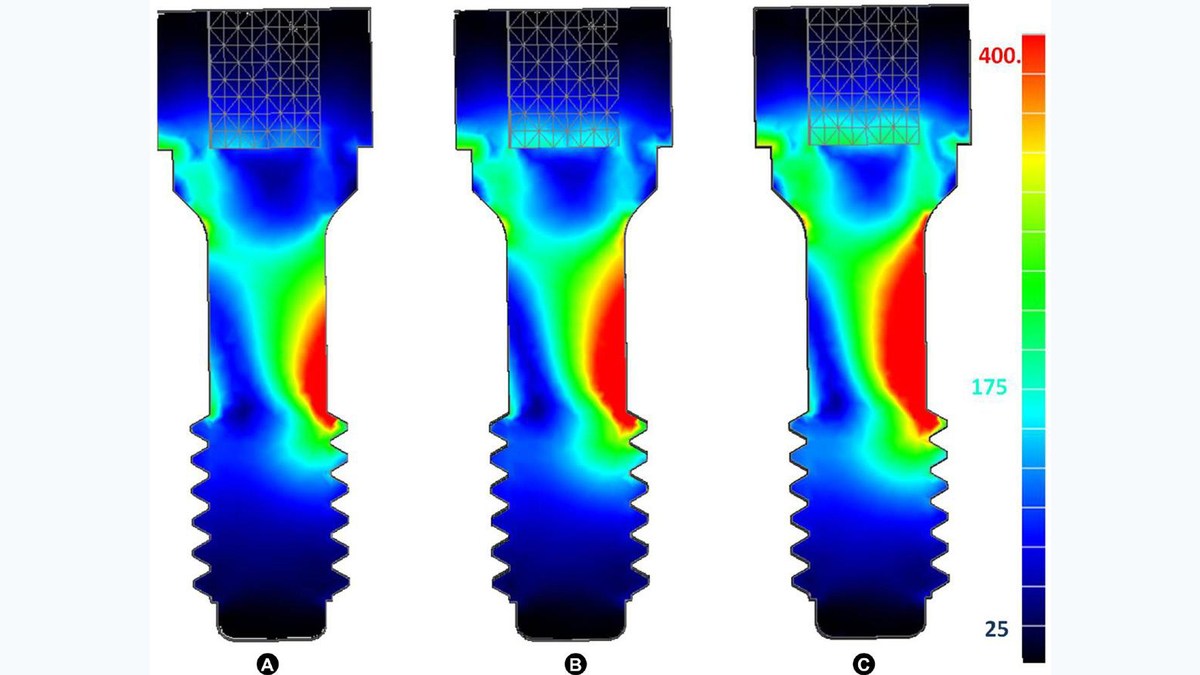
The article explains the relationship between tightening torque, preload and long-term stability of the implant-prosthetic connection. Torque is the rotational force applied during tightening, whereas preload is the tensile force created within the screw. It is this preload that helps keep components together against masticatory forces.
The concept of retorque is also clinically important. After initial seating and material relaxation, repeated tightening may help maintain the desired preload, particularly in areas exposed to greater functional loading.
What the article covers and how to read it
Relevance for the laboratory, dental practice and technical support
- Use a torque instrument in verified condition and the values recommended by the manufacturer for the specific system and screw. In recurrent complications, it is useful to verify the instrument's actual output rather than automatically assume that it is inaccurate.
- Record tightening and any retorque in the service protocol. Use retorque only where it is supported by the protocol for the specific system.
- If a screw is removed, consider replacement according to the clinical protocol and manufacturer recommendations.
- For angulated channels, verify compatibility of the instrument, screw and recommended procedure.
Torque ratchet: verify it, do not automatically blame it
In recurrent screw loosening, checking the torque instrument is useful because it removes one measurable variable. A systematic review of mechanical torque-limiting devices found that new spring-style and friction-style instruments can provide relatively accurate values, while also reporting substantial heterogeneity between studies. This does not mean that every torque ratchet in use is inaccurate. It means that its actual output should not simply be assumed during diagnosis.
A published dental technique describes validation of torque-limiting devices by direct comparison with a reference instrument. In practice, the appropriate wording is therefore “verify the output torque according to the manufacturer's instructions or a validated checking procedure”rather than making a general statement that every ratchet must automatically be treated as uncalibrated.
Limitations and cautious interpretation
Original source article
Original title: A Comprehensive Guide to Screw Tightening Techniques
Download the original PDF
The source document remains available so that the original wording, methodology and results can be checked.
Related IPD pages and workflows
Glossary of abbreviations and specialist terms
An asterisk next to a term in the text refers to its explanation below.
- retorque
- Retorque is repeated tightening of the screw after initial seating and material relaxation.
- preload
- Preload is the tensile force generated in a screw after tightening that keeps the joint clamped together.
- torque
- Torque is the tightening moment, the controlled rotational force applied when tightening a screw.
- TiN
- TiN means titanium nitride, a hard gold-coloured coating used on selected prosthetic components.