
Why the physical model must be verified
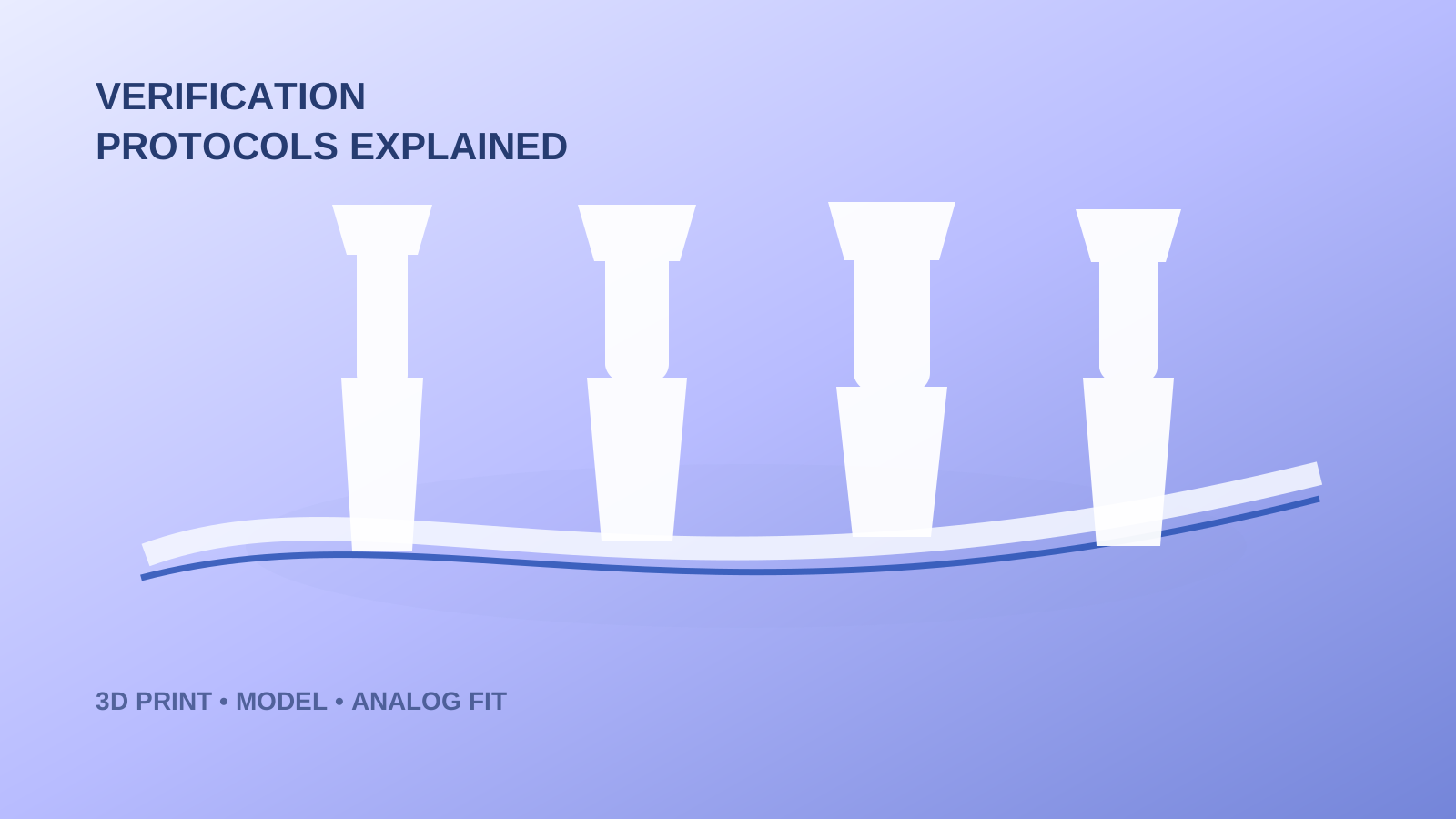
3D printing transfers the virtual design back into physical space. At this stage the result is influenced not only by the CAD file but also by the specific printer, resin, exposure, model orientation, washing and final curing. Even a small dimensional change in the receptacle can alter how the digital analog seats.
The verification protocol should therefore separate the “feeling that the analog fits” from a repeatable check. The aim is not to manually adjust every model, but to configure the workflow so that the same type of model behaves predictably within a specific printing setup.
Four sources of dimensional deviation
Recommended verification procedure
- Print a verification geometry using the same resin, orientation and post-processing as the routine implant model.
- Verify analog seating without forceful insertion and without unwanted play or rotation.
- Record the configuration of the printer, material, layer thickness, exposure and curing so that the result is reproducible.
- Repeat the test after changing the resin or parameters. An old offset is not automatically correct for a new process.
What verification cannot do and why different control layers exist
For a removable hybrid restoration, the resulting chain may therefore be local analog validation → global clinical verification of the implant-level model → definitive PSD-level transfer. Each gate controls a different part of the uncertainty.
Open the three possible transfer pathways for a hybrid PSD restoration →
Related pages
Original source
Rafael Saucedo: Verification protocols explained: ensuring accuracy in dental implants 3D printing, IPD USA, 2026.
