Start with function
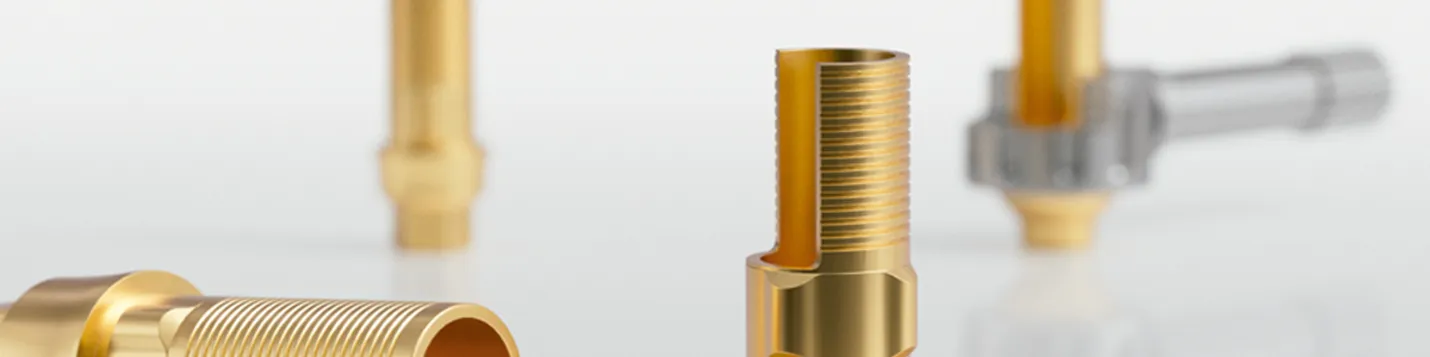
Healing abutments help shape peri-implant soft tissues; provisional abutments support temporary restorations. Stock abutments have predefined geometry; custom abutments can accommodate the tissue profile and restorative margin. Multi-unit abutments establish a prosthetic level across multiple implants.
Stock versus custom
A straightforward posterior restoration with favourable implant positioning may not need a custom abutment. Aesthetic, tissue-contour and margin-management challenges can favour a customised solution. Case-specific anatomy, rather than a general hierarchy, should guide selection.
Angulation, materials and retention
Angled abutments redirect the prosthetic axis. Titanium, zirconia and hybrid Ti-base reconstructions have different mechanical and aesthetic uses. Screw-retained restorations are retrievable; cement-retained designs require strict management of the cement margin and remnants.
Workflow checkpoint
Confirm the implant connection and platform, restorative level, tissue height, screw channel, compatible scan body, CAD library, base and fixation screw. Passive fit requires physical verification.
Interpretation note
A precision-manufactured connection should not be described as hermetically sealed or guaranteed to prevent bacterial microleakage.
Editorial digest based on the supplied original IPD article; limitations are explained by Exklusiv Dent.
Source date: 21 September 2026
Source and related topics: IPD: Why dental implant abutment types can be the determinant of long-term success (2026).