
English technical abstract
The article starts from a simple premise: a dental workflow is not automatically accurate simply because it is digital. Uncertainty can arise during scanning, data stitching, library alignment, CAD design, 3D printing, milling and clinical seating.
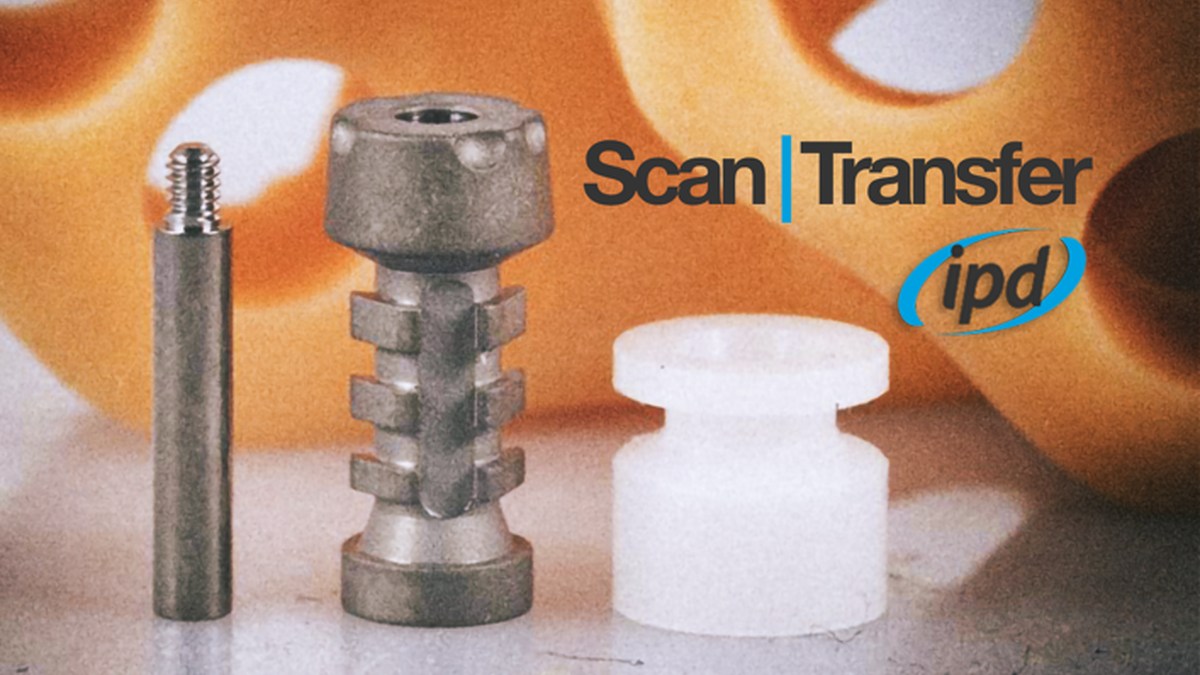
Its value within the IPD website is that it connects individual product pages into one concept. Scan bodies, libraries, digital analogs, Ti-bases and screws are not isolated items, but tools for reducing uncertainty throughout the workflow.
What the article covers and how to read it
Relevance for the laboratory, dental practice and technical support
- Each laboratory should define its own digital protocol: scanner, libraries, models, printer, resin and fit verification.
- Uncertainty is reduced through standardisation, not by improvising only after a problem appears.
- The article forms a useful conceptual bridge between ScanLogiQ, digital analogs, CAD libraries and Precision Matters.
From digital uncertainty to complication management: reducing uncontrolled variability
The principle described in the source article can also be applied to complication management. If the component, driver, torque, occlusion and seating method are all changed at once, it becomes impossible to know which change mattered. A diagnostically stronger approach is a standardised controlled retest, in which known and verifiable variables are kept constant and only the factor being tested is changed.
For recurrent fixation-screw loosening, this may mean exact component identification, the correct system-specific driver, verified torque-tool output, a clean connection, passive seating before tightening and documented occlusion. If the problem recurs under those controlled conditions, the investigation can focus on a narrower part of the mechanical chain.
Limitations and cautious interpretation
Original source article
Original title: Reducing Spheres of Uncertainty in the Digital Dental Flow
Download the original PDF
The source document remains available so readers can verify the original wording, methodology and results.
Related IPD pages and workflows
Glossary of abbreviations and specialist terms
An asterisk next to a term in the text refers to its explanation below.
- full-arch
- Full-arch means the entire dental arch, typically a scan or reconstruction of a complete edentulous arch.
- alignment
- Alignment is the registration or matching of a scanned 3D model to reference library geometry in CAD software.
- mesh
- A mesh is a 3D network of points and surfaces generated during digital scanning.